
COINCITY
Private view 3 October 2026
3 October – 19 December 2026
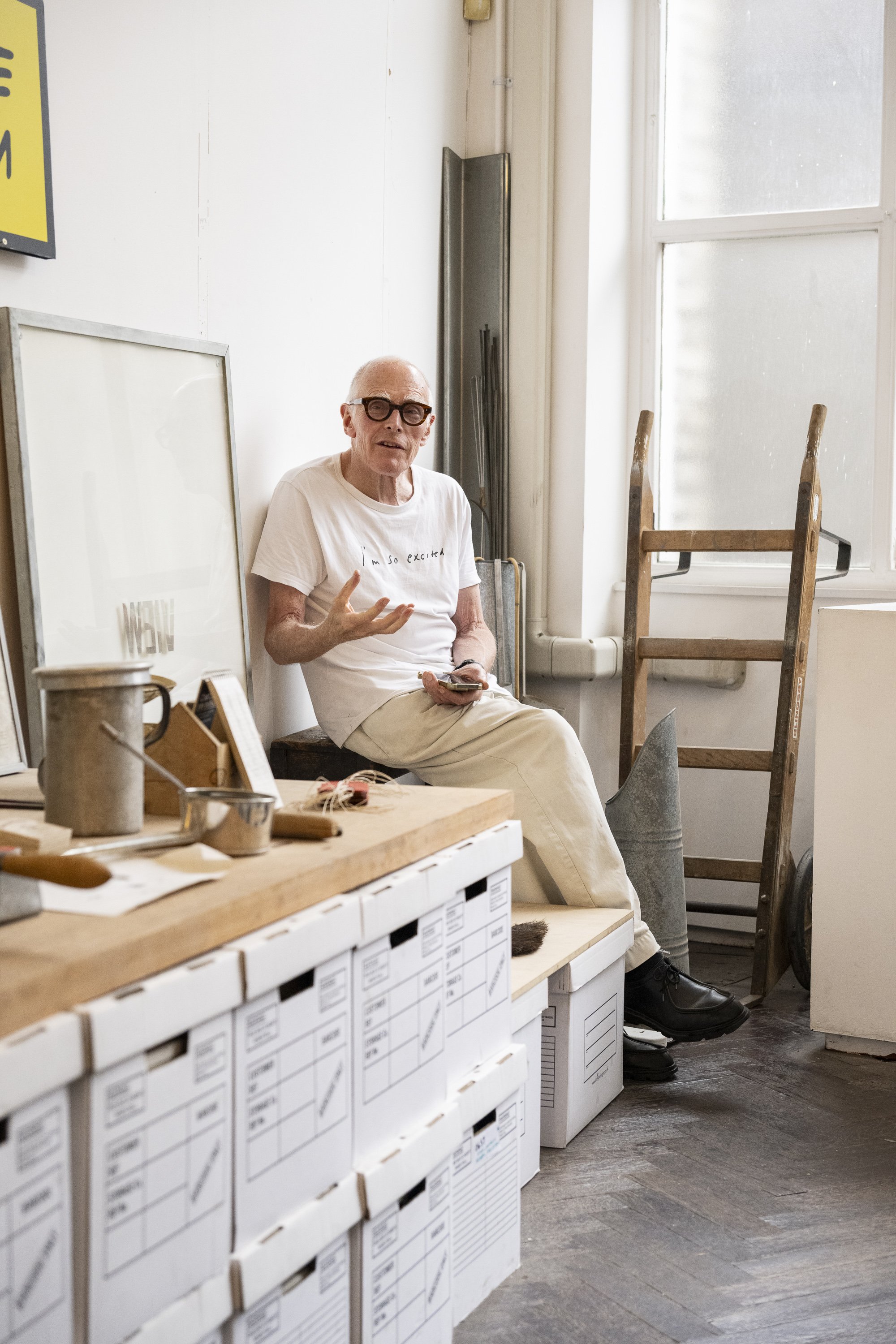
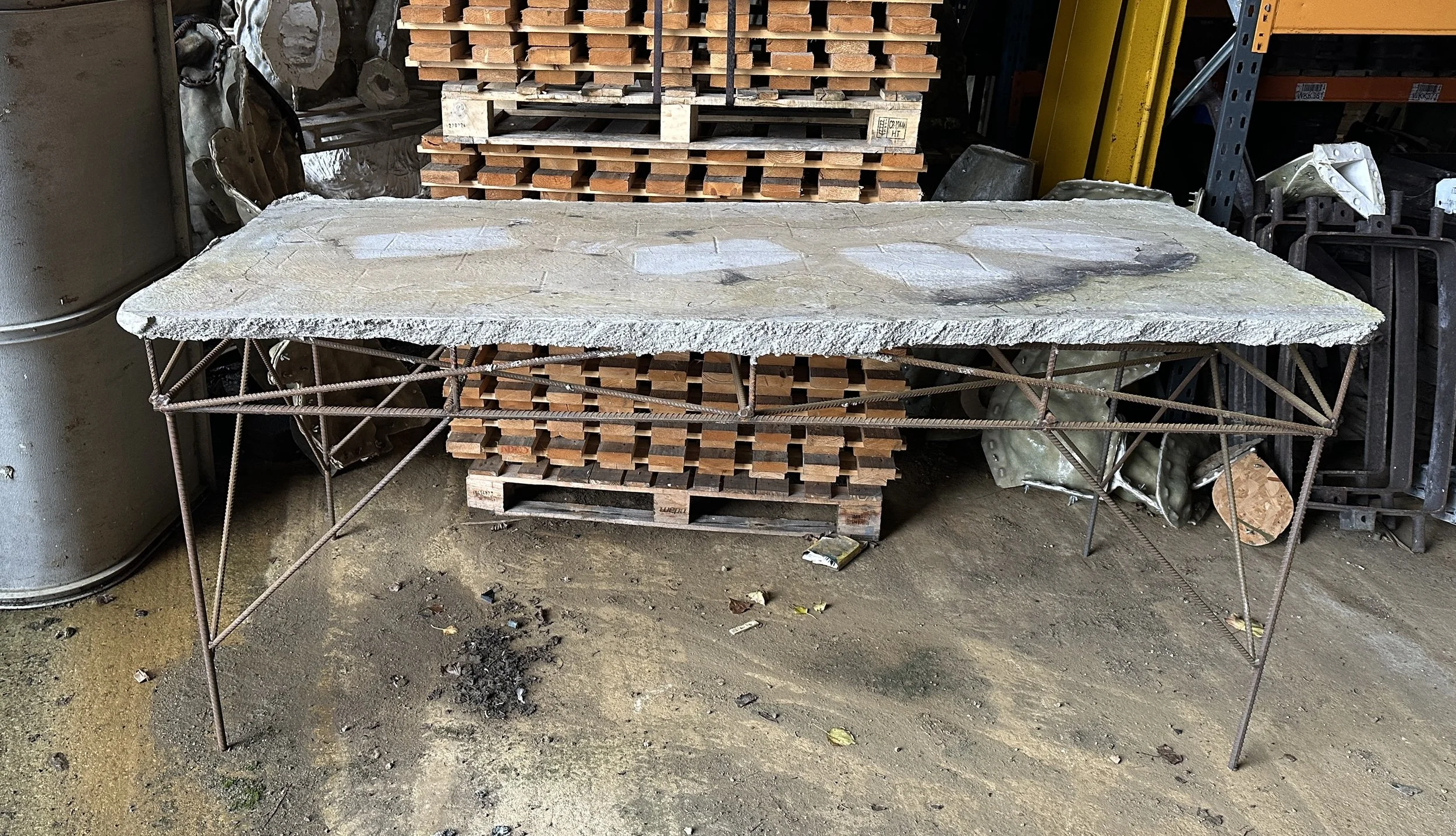
In October Richard Wentworth will be showing COINCITY at Far Far Gallery. Over recent years Richard Wentworth has been working closely with the Lockbund Foundry, established by gallery director Simon Allison, to develop works for two public sites in Central London on the Thames riverside. Wentworth remarked that he had little expectation of the complexities and eventualities which the work would provoke. In a letter to Lockbund, Wentworth explained his previous involvement with casting ...
“ In the late 1960's I was a sculpture student at the Royal College in Kensington.
Had you been walking up Queen's Gate past the goods entrance to the museums, you would be passing the extemporised premises of RCA Sculpture adjacent to the Film and TV department. They are no longer there. Places reside in our memories, all those encounters and happenstances. The sight of Francis Bacon crossing the Cromwell Road was ordinary.
Some evenings you might have found the RCA entrance obscured by billowing smoke and if you were inquisitive you would find men in boiler suits in a corrugated hut managing a rudimentary kiln, fired with coke (the coal derivative, not the stimulant). Night watchmen with tar barrel braziers were still a London commonplace, a branch of late Dickens.
The RCA foundry was a vivid component of the Sculpture School, and this smokey event would happen about once a month, foundry students staying up all night and managing the temperatures in the kiln as the waxes were melted out and the gases burned off.
The wax departs the mould, leaving the void ready for the bronze invader. The nearest experience for most people would be some aspects of pie making in the kitchen, and much less dangerous.
As a student this Goya-esque scene seemed entirely unremarkable. Of course students are a funny mixture of intensely curious and uninquisitive. It's only now that I am reminded how much I learned from witnessing these processes over that three year period.
The materiality of sculpture, how it was exhibited, and viewed, was changing fast, but the means of production still owed most of its language to processes that would have been commonplace a century before.
Around this time, coincident with the release of the Beatles’ Sgt. Pepper album, I worked for Henry Moore. I already knew lots of manual processes and had a working sense of how moulds were made and how they performed across a variety of materials.
At Henry's I was introduced to the novelty of him handing me a maquette. Invariably it was a small hand worked plaster, often not much bigger than an apple core, and Henry would say 'times eight'. Our working circumstances were modest but well organised, artisanal rather than industrial. My task, alongside other assistants, was to 'point up' the cardinal points on the maquette. This meant plotting key moments and then scaling them up using pointed sticks held together with scrim and plaster, often hilariously precarious.
I remember thinking how shockingly arbitrary it felt, being ambitious to do it well, but also it being the first time I had tested my skills in this way. There are two Henry Moore works, both editioned, out in the world which embody the anxieties and modest skills of that nineteen year old.
Amidst the elaborate language which we often associate with art criticism, it's rare to hear about these 'ordinary' practicalities, whereas in studios, artists are always playing the alchemical card to try and develop some 'new way'.
Of course it would never have occurred to this late teenager that they might return to the casting/moulding territory five decades later.
The organisational intelligence at Lockbund is a marvellous thing to witness, frank discussions about time and motion, materials and deadlines, ways and means, and the chance to witness all the processes in between.
I don't want to suggest that this was a damascene moment, but I would like to celebrate a pleasure which would have been well known to numerous heroes - Giacometti, Miró, Gonzalez when he was working closely with Picasso, add Rodin. As a callow student it would never have occurred to me that all this could join Elizabeth Frink, say, to Louise Bourgeois, or Brancusi with the mischief of Bruce Nauman.
Richard Wentworth
March 2026, London
COINCITY | October 2026
Join our mailing list to receive information.
Photography: Damian Griffiths